Skip to content

Business

What An MBA Didn’t Teach You About Sales

The sales profession is challenging. You need to work hard at it to succeed. You need to learn from the best. You need to improve your skills continuously. If you think you can sell since you are a hit at parties and have a lot of friends, you may soon find that you are a failure as a salesperson. Blunt truth:

because the sales profession is so hard, you have to focus on doing everything in sales very well, or you will be considered a failure.

I call this blog, Skinned Knees because I try to relate all of the learning that I have done over the past 4+ decades (while skinning my knees in the learning process).

I hope that you learn from my mistakes so that your business will grow!


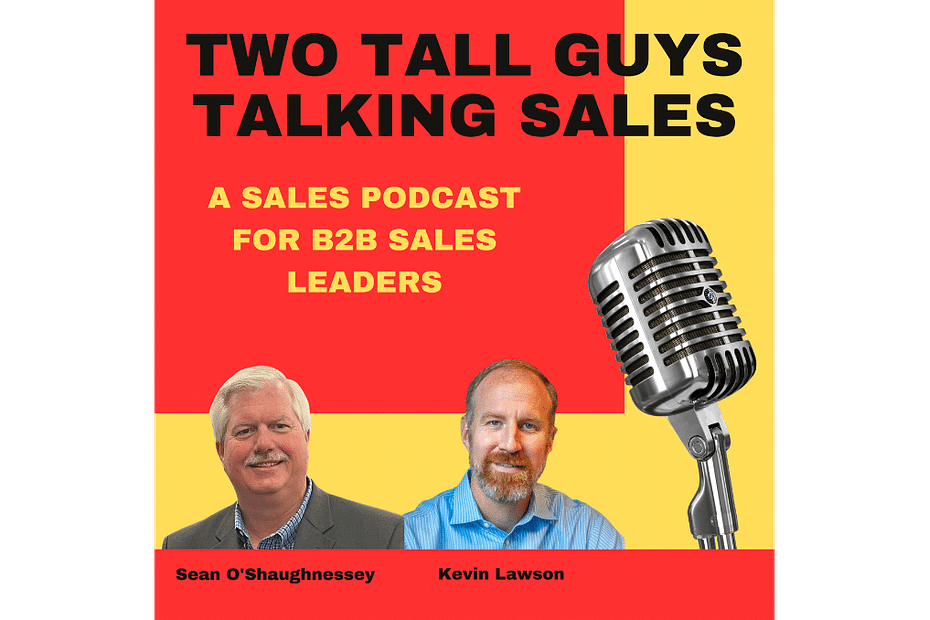
Two Tall Guys Talking Sales – From Comp Plans to Territory Alignment: Sales Strategies Every Leader Needs for Revenue Generation – Episode 153

As the year draws to a close, sales leaders and business owners face a critical challenge: preparing for growth in the year ahead. In this episode of Two Tall Guys Talking Sales, hosts Kevin Lawson and Sean O’Shaughnessey dive deep into sales management strategies that set the stage for long-term sales success. From refining compensation plans and aligning territories to planning product lifecycles and avoiding the dreaded “hockey stick” growth trap, this conversation is packed with insights on business acumen, value selling, and revenue generation strategies that every sales leader should master.

Key Topics Discussed

  • 01:00 – Planning Beyond This Year: Why sales leaders need to start preparing now for next year’s revenue generation and sales processes.
  • 02:11 – Building Smarter Compensation Plans: Evaluating and refining comp structures to drive sales success and attract top talent.
  • 03:13 – Product Lifecycle & AI Readiness: How shifts in markets and technology demand updates to your offerings and messaging.
  • 05:00 – Departmental Alignment for Growth: Understanding how revenue management and sales growth affect every department in your business.
  • 07:12 – Right People, Right Roles: Assessing whether your sales team is positioned for success in the next stage of your growth plan.
  • 11:20 – Avoiding the “Hockey Stick” Trap: Why spreading growth evenly across years is a better long-term sales strategy.

Key Quotes

  • Sean O’Shaughnessey (01:07): “If I asked you to write out your three-year plan, next year already knocks off the first year. Are you one-third of the way there, or do you need to rethink your path?”
  • Kevin Lawson (02:33): “Be planning ahead. Compensation plans aren’t a set-and-forget item—you need to revisit them every year to make sure they’re delivering the right results.”
  • Sean O’Shaughnessey (07:59): “Do I have the right people in the right place in my sales organization for next year? Not every salesperson has to leave, but maybe their role needs to evolve.”
  • Kevin Lawson (11:38): “You don’t want that third year of your plan to be a hockey stick. Don’t put yourself in a position where you suddenly need 40% growth in one year to hit your goals.”

Additional Resources

  • B2B Sales Lab: A peer community for sales leaders and professionals to sharpen strategies, exchange best practices, and get actionable feedback.
  • EOS Framework: For leaders who want to align messaging, sales strategies, and revenue management with long-term goals.

A Significant Actionable Item from this Podcast

Review and finalize your sales compensation plans by December 1st. This gives your team enough time to digest changes, ask questions, and align their sales strategies before the new year begins. Waiting until January leaves your salespeople unprepared, which can delay revenue generation and momentum.

Read the rest of the article…


Transforming Quota-Setting: Strategies for Sales Leaders to Optimize Performance and Revenue

Quota-setting is one of the most misunderstood elements of sales leadership. Too often, it’s treated as a spreadsheet exercise or a top-down directive, rather than a strategic lever that drives behavior, performance, and growth.

Whether you’re leading a team of 20 or you’re the founder managing three reps, how you define quotas has a direct impact on your revenue trajectory and your team’s motivation.

So, where do you start?

With timing. If you’re not delivering quotas to your team until February or March, you’re already behind. Salespeople need clarity by December. That gives them runway to plan, prioritize, and hit the ground running in January. Delayed quotas create confusion and stall momentum. To achieve a strong Q1, you need to equip your team early.

Quota-setting varies depending on the size of your company. Larger teams offer more flexibility. With 10 or more reps, you can spread risk, balance performance, and model averages. You’ll have top performers who consistently overdeliver, alongside newer reps who are still ramping up. The law of averages works in your favor. You can afford some variance. Smaller teams don’t have that luxury.

When you’re running a small team, maybe two or three reps or founder-led sales, every individual matters. One person missing quota can tank your number.

You can’t rely on averages. You need precision.

That means tying quotas to actual relationships, known opportunities, and real probability. It’s not about slicing up a target evenly. It’s about assigning numbers based on what’s realistically achievable in each territory or account list.

Territory design plays a big role here. Whether it’s geographic, vertical, or named accounts, quota must reflect the market potential. You can’t expect equal performance from unequal opportunity. If Rep A has 500 viable accounts and Rep B has 50, their quotas shouldn’t look the same unless you have data that says Rep B’s accounts are closer to your Ideal Client Profile. Use available market data to inform the number. Don’t assign quotas in a vacuum. 

In larger organizations, quotas often originate from the top down, typically from finance. The CEO and CFO commit a growth number to the board, investors, or in public filings to the SEC. They have no choice but to pass it down. It’s not uncommon for the sales team to receive the number without context. That’s a problem. If you’re in a leadership role, you need to pressure test that number. Can your team realistically hit it? If not, what additional resources are required?

  • More headcount?
  • Better enablement?
  • Marketing support?

In large organizations where the quota is driven by investor expectations, the VP of Sales must establish an organization well before the new year that achieves this year’s goal, while also meeting the expectation of growth for the next year. Planning ahead, sometimes years in advance, is part of the job.

Read the rest of the article…

Turning Around Sales Performance: Strategies for CEOs and Sales Managers to Foster Internal Alignment

Navigating a sales turnaround isn’t just about fixing numbers; it’s about transforming the business. It’s about realigning expectations, rebuilding internal trust, and creating a structured, sustainable path forward. 

If you’re a CEO, sales manager, or a key salesperson in your organization, the pressure to reverse a sales slump can feel overwhelming. However, the truth is that turnarounds aren’t made in a sprint; they’re built through clarity, consistency, and effective communication.

Too often, sales leaders make the mistake of focusing only on the downward trend. They get caught up in the urgency of the numbers and forget that the real challenge lies in managing upward, setting expectations with executive leadership, and aligning them with reality. 

If your sales team is underperforming, your internal stakeholders are your new audience. Just as with external prospects, you need to manage their expectations with a clear, actionable plan.

The process starts with a shift in mindset. 

Instead of viewing upper management as critics, think of them as clients. What do they need to believe in this turnaround? What information do they need to trust your leadership? Start by building a high-level outline. Avoid over-engineering the details in the early stages. Focus on where you want to go, then reverse-engineer the steps to get there.

Every turnaround starts from a rear position. That means your first job is to stop the downward momentum. Before you can scale revenue, you need to stabilize it. That requires a clear definition of success, agreed upon by everyone involved. 

  • Are you trying to double revenue in 12 months? 
  • Or just return to last year’s baseline? 
  • Is that goal realistic given your market, team, and resources? 

If not, revise it. A stretch goal is fine. A fantasy is not.

Read the rest of the article…

From Reporting to Coaching: Elevate Your One-on-One Sales Meetings to Drive Performance and Trust

A one-on-one sales meeting is not a reporting meeting. It’s not about reviewing what already happened. And it’s definitely not about the manager doing most of the talking. The purpose of a one-on-one pipeline review is to develop the salesperson, surface challenges, and accelerate opportunities. If your one-on-ones are anything less, you’re leaving performance on the table.

Sales leaders often default to micromanagement. 

Especially when the rep is new or struggling. But that approach backfires. It creates dependency and stifles problem-solving. The goal is to coach your reps into leading the meeting. That shift changes everything. When reps own the agenda and bring forward deal-level insights, they’re forced to think critically. That’s where growth happens.

If you’re leading a sales team or are a CEO playing the role of sales manager, you need to establish a clear structure. But the rep does the prep. You define the meeting cadence and format. Weekly or bi-weekly, depending on your velocity. You outline the sections: committed deals, stalled deals, and at-risk deals. 

But the rep fills in the content. They come to the meeting ready to walk you through each opportunity, with specific updates and clear asks.

Preparation is non-negotiable. For both sides. 

The salesperson should have updated their CRM before the meeting. The manager should have reviewed that data in advance. If either party shows up unprepared, the meeting becomes reactive. 

A waste of time. And it erodes trust quickly. 

Reps notice when you haven’t read the notes. They know when you’re winging it. And if they feel their effort isn’t valued, they’ll stop putting in the effort.

You want to create a culture where preparation is expected and rewarded. 

The fastest way to management failure is to ask questions that could have been answered by reading the CRM. Instead, use that time: 

  • To probe deeper. 
  • Ask about the deal strategy. 
  • Challenge assumptions. 
  • Help salespeople spot gaps they missed. 

That’s where your experience has real value.

It’s tempting to jump in and solve the problem. Especially when you see the red flags before the rep does. But resist the urge. Let them talk it through. Coach them toward the insight. Your job isn’t to close the deal; it’s to build someone who can. That means teaching them how to identify weak spots, how to pressure test a deal, and how to re-engage a stalled buyer. The real value of one-on-ones is in that development.

Think about how you coach. 

Are you diagnosing for them? Or are you helping them diagnose for themselves? When a rep says “this deal is solid, no issues,” that’s a red flag. Every deal has risk. Your job is to help them uncover it. Ask: “What’s the biggest thing that could derail this?” Or “What’s the last thing the buyer said that gave you pause?” These questions surface the truth. And they teach reps to self-assess more effectively.

There’s a fine line between coaching and grading. You want reps to be honest about their pipeline without fear of judgment. 

If a deal is weak, that’s not a character flaw. It’s a coaching moment. 

Read the rest of the article…

B2B Sales in the Age of AI: Why Top Salespeople Will Thrive While the Repetitive Roles Disappear

The buzz surrounding artificial intelligence has left many professionals wondering about the future of their careers. For B2B sales professionals, the rise of AI presents a fundamental question: Will AI replace salespeople?

The short answer is no, but it will replace some of their work. More accurately, AI will redefine the B2B sales landscape by eliminating lower-value activities, consolidating support roles, and enhancing the capabilities of top performers. In doing so, it will widen the gap between average and great salespeople.

Several years ago, I wrote a similar explanation about the fear that “the internet” would replace salespeople. That didn’t happen. You can find that article on the blog that supports my first sales book. Are salespeople necessary in the Internet age?

This blog post explores how B2B sales is positioned relative to AI disruption, referencing key insights from Benjamin Todd’s article, “How Not to Lose Your Job to AI” (80,000 Hours, 2025). Todd’s framework on skill types that increase in value in the age of AI helps us understand how high-functioning sales teams should evolve and how sales professionals can future-proof their careers.

Understanding AI’s True Impact: Augmentation, Not Replacement

A common misconception about AI is that it simply replaces humans. This isn’t true. AI devalues tasks it can perform while increasing the importance of the skills it cannot. Todd explains this dynamic through examples like the ATM: while the ATM reduced the need for transactional teller tasks, it actually increased demand for bank branch workers by allowing banks to open more branches. AI follows a similar pattern.

In B2B sales, AI will handle the most automatable tasks, such as data entry, follow-ups, list-building, and basic prospecting emails. However, this doesn’t eliminate the sales role; it sharpens its focus.

Instead of dialing hundreds of prospects daily, sales professionals will focus more on strategic engagement, account planning, and using AI-generated insights to elevate conversations. The result? Sales has become a more thoughtful, human, and strategic discipline for those who can keep up.

Four Categories of Skills That AI Will Make More Valuable

In Todd’s excellent article, he identifies four skill types that increase in value in an AI-enhanced workplace:

  1. Hard-to-automate skills
  2. Deployment-related skills
  3. Scarce, high-utility skills
  4. Skills hard for others to learn or replicate

Each of these aligns tightly with the demands of modern B2B sales.

Read the rest of the article…

Two Tall Guys Talking Sales – Elevate Your Sales Game with B2B Sales Lab: A New Resource for Revenue Growth – Episode 141

When sales professionals hit a roadblock, where do they turn? In this episode of Two Tall Guys Talking Sales, Kevin Lawson and Sean O’Shaughnessey unveil an exciting new initiative: B2B Sales Lab, a private peer networking community designed to support salespeople, sales managers, and business owners in their journey toward revenue generation excellence. This isn’t just a conversation; rather, we are offering an invitation to join something powerful. If you’ve ever felt alone in a… 

Navigating the Sales Maze: Overcoming Missed Steps in Your Sales Process

The challenges for a salesperson or a sales manager are numerous. One such challenge that often arises during the sales process is the realization that a crucial step has been skipped. This situation is not uncommon and is faced by many salespeople. However, it’s not a moment for reprimanding or pulling out an accountability chart. Instead, it’s a moment of realization and an opportunity to rectify the error to avoid ending up in the ‘no decision lane.’

I have written about the importance of skipping stages of the sales process elsewhere on this site, most recently in “The Key to Profitable Sales Organizations: Understanding and Adhering to the Sales Process,” where I remind you that, according to the Harvard Business Review, 28% of companies that master at least three stages of their sales process will see an increase in revenue growth.

When you recognize you’ve missed a step in your sales process, it resembles backing up a train. You’ve got a lot of cars put together, but one is out on its own. Addressing this situation requires a specific style and approach. As a sales leader, your focus should be on the next step in the process. Have you covered this step from a question in the sales meeting? It’s important to ask questions like, “What is next? What is missing? What is now?” 

As a salesperson, if you realize you’ve missed a step, address it head-on. This approach allows you to rectify your error and builds trust with your prospect by demonstrating transparency and accountability. 

Read the rest of the article…

The Key to Profitable Sales Organizations: Understanding and Adhering to the Sales Process

Many salespeople, sales managers, and CEOs face a unique problem. This issue concerns the sales process, particularly when specific steps are skipped. The challenge is common among sales teams across various industries, and there are different perspectives on its causes and solutions.

This issue is concerning since, according to Harvard Business Review, 28% of companies that master at least three stages of their sales process will see an increase in revenue growth. (https://hbr.org/2015/01/companies-with-a-formal-sales-process-generate-more-revenue). That same study states that companies that had trained their sales managers to manage their pipelines saw their revenue grow 9% faster than those that didn’t. But not just any training will do. Sales managers need targeted training to address specific pipeline management challenges.

Sometimes, the sales process might seem tedious, and salespeople may skip steps out of impatience or eagerness to close a deal. However, skipping these steps can lead to further complications down the line. When a sales team is not following the process that has been identified, it can disrupt the team’s rhythm and efficiency. Some might argue that this is a sign that the process needs to change or that more training is required.

This issue extends beyond the sales team. When a company hires a fractional VP of sales, it brings an outside perspective to evaluate its sales process. The fractional VP will often encounter resistance from the existing team, who may feel their industry is unique. While every business has its distinctive elements, the fundamentals of a sales process are universal.

Read the rest of the article…

Validation Events: The Unsung Hero of Sales Process Discipline

In the complex world of B2B selling, trust is built in stages. The challenge in all sales campaigns is ensuring the prospect trusts they are making the best decision for their business.

  1. Do they trust that the salesperson is giving them all of the information?
  2. Do they trust that the company will support them after the sale?
  3. Do they trust that the product will perform as they expect it to perform?

As I have explained in my book, Eliminate Your Competition, as well as the blog for that book and in this blog, the prospect needs to trust all three elements the salesperson is selling:

  1. They need to trust the product.
  2. They need to trust the company behind the product.
  3. They need to trust the salesperson.

Prospects listen to your sales message, review your materials, and hear your claims, but none of that guarantees belief or trust. Trust is validated when your claims are validated. That’s why validation events are crucial to any rigorous sales process.

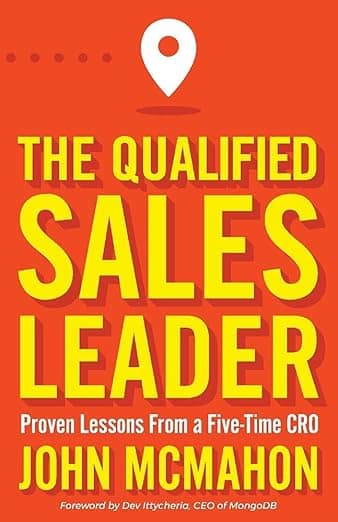
In The Qualified Sales Leader, John McMahon stresses the importance of customer-driven validation. He cautions sales leaders against relying on internal optimism or anecdotal “good signals” from prospects. Instead, McMahon emphasizes observable proof—real buyer behavior that confirms alignment, commitment, and value. Validation events are when the customer takes action to validate that what you’ve promised is accurate and valuable.

An excellent sample sale process flow looks like this:

  1. Discover
  2. Scoping
  3. Economic Buyer Meeting
  4. Validation Event
  5. Business Case and Final Proposal
  6. Negotiate and Close

As you can see, the Validation Event is the last step before creating the final business case, which will be bundled with your final proposal.

Read the rest of the article…