Skip to content

sales strategy

What An MBA Didn’t Teach You About Sales

The sales profession is challenging. You need to work hard at it to succeed. You need to learn from the best. You need to improve your skills continuously. If you think you can sell since you are a hit at parties and have a lot of friends, you may soon find that you are a failure as a salesperson. Blunt truth:

because the sales profession is so hard, you have to focus on doing everything in sales very well, or you will be considered a failure.

I call this blog, Skinned Knees because I try to relate all of the learning that I have done over the past 4+ decades (while skinning my knees in the learning process).

I hope that you learn from my mistakes so that your business will grow!


Two Tall Guys Talking Sales – Sales Management Masterclass: Paul Rafferty’s Proven Framework for Smarter Deal Reviews and Revenue Generation – Episode 159

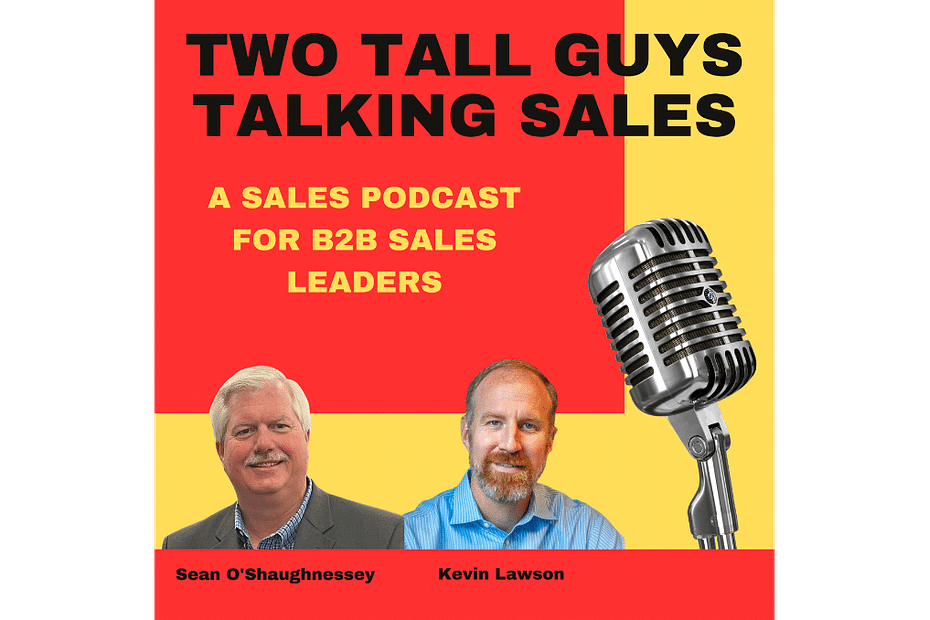
Welcome back to Two Tall Guys Talking Sales with hosts Kevin Lawson and Sean O’Shaughnessey. In this dynamic episode, the Tall Guys welcome Paul Rafferty from Sales Xceleration to explore the art and science of sales coaching, deal qualification, and the importance of building sales acumen. Paul brings decades of experience in sales management, value selling, and revenue generation, offering a practical framework for sales leaders who want to coach their teams more effectively and for reps who want to stop chasing the wrong deals.

Discover how to transform your team’s approach to sales processes—from opportunity scoring to understanding a buyer’s “pain chain.” This conversation is packed with actionable insights that blend sales strategy, business acumen, and real-world stories you can immediately apply to your own selling environment.

Key Topics Discussed

  • 03:00 — Building a Deal Coaching Framework:
    Paul introduces his 100-point scorecard system that evaluates the Ideal Prospect Profile, the Pain Chain, and Commitment to Decision. This framework transforms deal reviews into powerful coaching sessions rather than mere forecast updates.
  • 05:10 — The “Pain Chain” and Sales Philosophy:
    Sean and Paul discuss how understanding buyer pain isn’t optional—it’s foundational to value selling. Without real pain, there’s no compelling reason for your buyer to act.
  • 06:45 — From Friendly to Effective Salesperson:
    Paul and Sean discuss how friendliness can open doors, but it’s teaching and insight that ultimately win deals. Sales success comes from challenging your prospects and helping them think differently.
  • 08:00 — Why Deals Get Stuck:
    Kevin and Paul explore how most stalled deals trace back to weak discovery. Coaching your team to go deeper early in the sales process prevents gridlock later.
  • 10:30 — The Currency of Knowledge:
    Paul explains that in modern selling, gifts and lunches no longer move the needle—information does. Great salespeople earn influence by being teachers, not vendors.

Key Quotes

  • Paul Rafferty (03:50):
    “It’s not what you do—it’s what they do. The scorecard helps you coach reps to spend time where there’s real buying intent, not just big logos.”
  • Sean O’Shaughnessey (05:43):
    “Salespeople need to understand the theory of sales. Without knowing the frameworks—like the pain chain or solution selling—you’re just saying, ‘I’m a nice guy, buy from me.’”
  • Kevin Lawson (08:38):
    “Most deals go to die in the discovery phase. Coaching means rewinding the tape and helping reps fix what wasn’t done early enough.”
  • Paul Rafferty (12:51):
    “Your currency is information—help your buyer look smart, get promoted, and win internally. That’s real value selling.”

Additional Resources

  • Paul Rafferty
    • prafferty@salesxceleration.com 
    • https://www.linkedin.com/in/pauljrafferty/
  • Books referenced:
    • Solution Selling by Michael Bosworth – https://a.co/d/hHtYSiX
    • The Challenger Sale by Matthew Dixon & Brent Adamson – https://a.co/d/2kJsbDU
    • Strategic Selling by Robert Miller & Stephen Heiman – https://a.co/d/icPcC6H

A Significant Actionable Item from this Podcast

Implement a Deal Coaching Scorecard.
Instead of subjective forecasting (“This deal is 70% likely to close”), create an objective scoring model based on:

  1. Ideal Prospect Fit (25 pts) – Does this prospect align with your best customer profile?
  2. Pain Chain (25 pts) – Have they admitted to a real, solvable pain?
  3. Commitment to Decision (50 pts) – Have they engaged decision-makers and committed to next steps?

Use this tool in your next pipeline review. It will sharpen your sales management coaching, improve revenue forecasting, and elevate your team’s overall sales success. If you want more information about this scorecard, reach out to Paul Rafferty at his address above.

Read the rest of the article…


The Evolution of Sales: Scaling from 10 to 100 Customers

The journey of a business unfolds as a story of growth, change, and ongoing adaptation. As salespeople, sales managers, and CEOs, we all share the ups and downs that come with this path. One of the most exciting moments in sales is the shift from landing your first ten customers to growing your family of clients to 50 or even 100. This milestone is truly a game-changer, shaping the future direction of your business.

When you’re starting, your focus is on acquiring those first ten customers. You’re trying to find your footing in the market, identify your target audience, and refine your product or service offering. You might be customizing your product or service for each customer to ensure it fits their specific needs. However, as you aim for the next level of growth, you need to start thinking about systemizing your sales process. 

To grow successfully, it’s helpful to have a standardized product or service. While customizing can be useful when you’re just starting out, it can become hard to manage and slow you down as your customer base expands. 

Focus on creating a product or service that you can sell over and over again with just small tweaks. This approach simplifies your sales process and makes it easier for others to sell your offerings, too.

Read the rest of the article…

Stop Researching, Start Connecting: An AI-Powered System for Warm Introductions

Most sales teams begin the week by opening a dozen browser tabs and grinding through scattered research, LinkedIn, Google News, company websites, and databases. Hours later, they emerge with a few generic talking points and a cold list that still feels cold. The deeper issue isn’t inefficiency; it’s invisibility. Warm introductions already exist across your company’s network, in email histories, calendars, and executives’ LinkedIn connections, but you can’t see them on Monday morning.

The Relationship-First approach changes that default. Before a single cold call or email, you perform a deliberate “Warm Path Check.” You ask, “Who do we know who knows them?” This question transforms prospecting from random outreach into a repeatable, data-driven process that prioritizes relationships. When you start as a referred conversation rather than an interruption, skepticism drops, credibility rises, and the sales cycle compresses dramatically.

The Hidden Network You’re Not Using

Every organization has an untapped network, a web of past colleagues, vendors, and clients who could open doors to your dream accounts. The problem is that this network is hidden in plain sight. It lives in the collective memory of your company’s communication patterns, but there’s no easy way to access it manually. That’s where KnowledgeNet comes in.

KnowledgeNet serves as your organization’s “relationship intelligence” layer. It analyzes communication data (emails, meetings, messages) to reveal who knows whom, and how strong those connections really are. Instead of guessing, you can instantly see that a colleague in engineering once worked closely with the CFO of a target account. That’s a warm path waiting to be used.

Read the rest of the article…

From 10 to 100 Customers: Scaling Your Sales Process for Growth

For founders of companies, the journey of a business is a narrative of evolution, growth, and constant adaptation. As salespeople, sales managers, and CEOs, we are all too familiar with the challenges and triumphs that punctuate this journey. In the world of sales, one of the most critical turning points is the transition from acquiring your first ten customers to expanding your customer base to 50 or even 100. This pivotal moment sets the trajectory of a business and is a key focus of our discussion.

When you’re starting, the founding team is focused on acquiring those first ten customers. They’re trying to find their footing in the market, identify their target audience, and refine their product or service offering. You might be customizing your product or service for each customer to ensure it fits their specific needs. However, as you aim for the next level of growth, it’s crucial to start thinking about systemizing your sales process. This will ensure efficiency and prepare you for the next level of growth. 

To scale effectively, company leaders need to standardize their product or service offering. While customization can be beneficial in the early stages, it becomes impractical and inefficient as your customer base grows. The key here is to create a product or service that can be sold repeatedly with minimal adjustments. This streamlines the sales process, making it easier for others to sell the product or service.

In the early stages of a business, the founders might be the ones doing all the selling. But as the company grows, this becomes less feasible. To reach a larger number of customers, you need to bring others on board to sell for you. This is where standardization comes into play. By standardizing your product or service, you make it easier for others to understand and sell it. 

Read the rest of the article…

Mastering Sales Channels: How to Align Your Strategy for Maximum Impact

Understanding the dynamics of sales channels can transform how businesses approach their markets. Many sales professionals, whether they are salespeople, managers, or CEOs, often miss a critical distinction: the difference between the product they are selling and the value it provides. 

This gap in understanding can lead to suboptimal sales performance, particularly in environments where products are sold through intermediaries, such as distributors, referral partners, or dealer networks. The challenge is not just about knowing your product, but also about understanding how to position it in a way that resonates with every player in the sales chain.

Sales success starts with recognizing who your true customer is. In sales management or channel sales, the end customer is often not the person you interact with directly. Instead, your “customer” might be the intermediary, your distributor, reseller, or even your own sales team. These intermediaries are the ones who ultimately connect your product to its final user. If you don’t understand their challenges, motivations, and context, you risk failing to equip them with the necessary tools to succeed. Are you selling a product’s features, or are you helping them understand how to sell it effectively? This distinction is vital.

When selling through intermediaries, the emphasis should shift from “what the product does” to “how the product can be sold.” Your distributors or referral partners don’t need every technical detail of your product. They need clarity on how it solves problems for their customers, how it fits into their existing offerings, and how they can position it to drive sales. 

The goal is not to overwhelm your partners with information but to provide actionable insights that align with their specific needs. If you’re focusing solely on product features, you’re likely missing the mark.

Salespeople and sales managers must also recognize the game they are playing. Are you selling a commodity, a widely available product, or an exclusive offering? Each scenario demands a different strategy. 

Commodities often compete on price, necessitating bulk sales or value-added services to differentiate themselves. Widely available products often rely on relationships, service quality, or unique add-ons to differentiate themselves. Exclusive products, on the other hand, can often avoid price wars by emphasizing their uniqueness and superior quality. Knowing which game you’re in allows you to tailor your approach and avoid misaligned strategies.

For small businesses and solopreneurs, the challenge lies in effectively managing referral partners. Referral partnerships are a powerful way to generate leads, but they require careful management and oversight. 

Read the rest of the article…

Two Tall Guys Talking Sales – From Comp Plans to Territory Alignment: Sales Strategies Every Leader Needs for Revenue Generation – Episode 153

As the year draws to a close, sales leaders and business owners face a critical challenge: preparing for growth in the year ahead. In this episode of Two Tall Guys Talking Sales, hosts Kevin Lawson and Sean O’Shaughnessey dive deep into sales management strategies that set the stage for long-term sales success. From refining compensation plans and aligning territories to planning product lifecycles and avoiding the dreaded “hockey stick” growth trap, this conversation is packed with insights on business acumen, value selling, and revenue generation strategies that every sales leader should master.

Key Topics Discussed

  • 01:00 – Planning Beyond This Year: Why sales leaders need to start preparing now for next year’s revenue generation and sales processes.
  • 02:11 – Building Smarter Compensation Plans: Evaluating and refining comp structures to drive sales success and attract top talent.
  • 03:13 – Product Lifecycle & AI Readiness: How shifts in markets and technology demand updates to your offerings and messaging.
  • 05:00 – Departmental Alignment for Growth: Understanding how revenue management and sales growth affect every department in your business.
  • 07:12 – Right People, Right Roles: Assessing whether your sales team is positioned for success in the next stage of your growth plan.
  • 11:20 – Avoiding the “Hockey Stick” Trap: Why spreading growth evenly across years is a better long-term sales strategy.

Key Quotes

  • Sean O’Shaughnessey (01:07): “If I asked you to write out your three-year plan, next year already knocks off the first year. Are you one-third of the way there, or do you need to rethink your path?”
  • Kevin Lawson (02:33): “Be planning ahead. Compensation plans aren’t a set-and-forget item—you need to revisit them every year to make sure they’re delivering the right results.”
  • Sean O’Shaughnessey (07:59): “Do I have the right people in the right place in my sales organization for next year? Not every salesperson has to leave, but maybe their role needs to evolve.”
  • Kevin Lawson (11:38): “You don’t want that third year of your plan to be a hockey stick. Don’t put yourself in a position where you suddenly need 40% growth in one year to hit your goals.”

Additional Resources

  • B2B Sales Lab: A peer community for sales leaders and professionals to sharpen strategies, exchange best practices, and get actionable feedback.
  • EOS Framework: For leaders who want to align messaging, sales strategies, and revenue management with long-term goals.

A Significant Actionable Item from this Podcast

Review and finalize your sales compensation plans by December 1st. This gives your team enough time to digest changes, ask questions, and align their sales strategies before the new year begins. Waiting until January leaves your salespeople unprepared, which can delay revenue generation and momentum.

Read the rest of the article…

From Manual to Automated: A Sales Pro’s Guide to Zapier, Make.com, n8n, and Pipedream

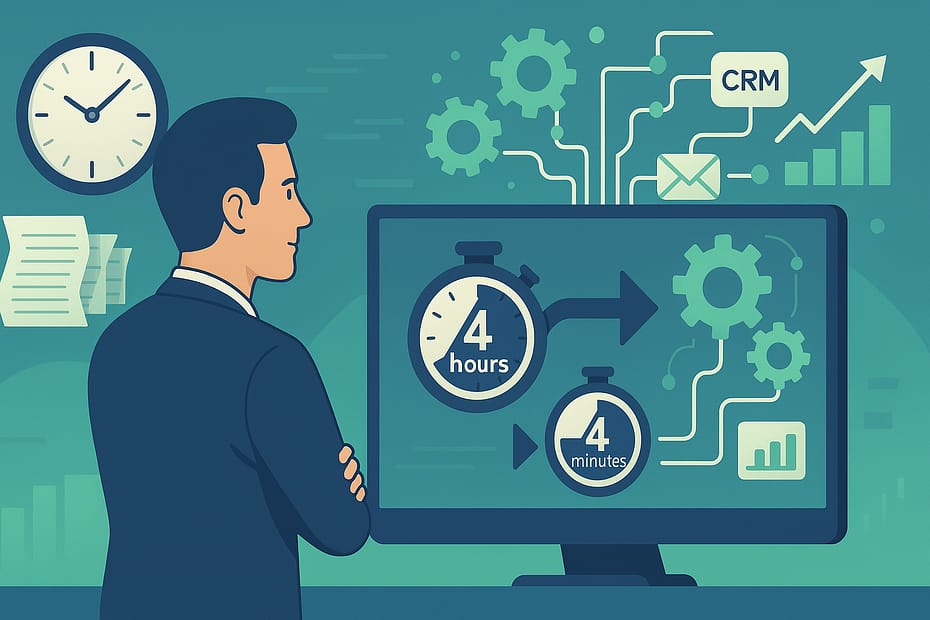
A sales manager recently told me something that stuck: “We went from twenty hours per week of manual work to two hours. Our lead response time dropped from four hours to four minutes.” That dramatic transformation wasn’t magic—it was automation. The reality is that sales teams today have more automation tools available than ever before. But with options like Zapier, Make.com, n8n, and Pipedream, the real challenge isn’t whether you should automate—it’s choosing the right… 

Transforming Quota-Setting: Strategies for Sales Leaders to Optimize Performance and Revenue

Quota-setting is one of the most misunderstood elements of sales leadership. Too often, it’s treated as a spreadsheet exercise or a top-down directive, rather than a strategic lever that drives behavior, performance, and growth.

Whether you’re leading a team of 20 or you’re the founder managing three reps, how you define quotas has a direct impact on your revenue trajectory and your team’s motivation.

So, where do you start?

With timing. If you’re not delivering quotas to your team until February or March, you’re already behind. Salespeople need clarity by December. That gives them runway to plan, prioritize, and hit the ground running in January. Delayed quotas create confusion and stall momentum. To achieve a strong Q1, you need to equip your team early.

Quota-setting varies depending on the size of your company. Larger teams offer more flexibility. With 10 or more reps, you can spread risk, balance performance, and model averages. You’ll have top performers who consistently overdeliver, alongside newer reps who are still ramping up. The law of averages works in your favor. You can afford some variance. Smaller teams don’t have that luxury.

When you’re running a small team, maybe two or three reps or founder-led sales, every individual matters. One person missing quota can tank your number.

You can’t rely on averages. You need precision.

That means tying quotas to actual relationships, known opportunities, and real probability. It’s not about slicing up a target evenly. It’s about assigning numbers based on what’s realistically achievable in each territory or account list.

Territory design plays a big role here. Whether it’s geographic, vertical, or named accounts, quota must reflect the market potential. You can’t expect equal performance from unequal opportunity. If Rep A has 500 viable accounts and Rep B has 50, their quotas shouldn’t look the same unless you have data that says Rep B’s accounts are closer to your Ideal Client Profile. Use available market data to inform the number. Don’t assign quotas in a vacuum. 

In larger organizations, quotas often originate from the top down, typically from finance. The CEO and CFO commit a growth number to the board, investors, or in public filings to the SEC. They have no choice but to pass it down. It’s not uncommon for the sales team to receive the number without context. That’s a problem. If you’re in a leadership role, you need to pressure test that number. Can your team realistically hit it? If not, what additional resources are required?

  • More headcount?
  • Better enablement?
  • Marketing support?

In large organizations where the quota is driven by investor expectations, the VP of Sales must establish an organization well before the new year that achieves this year’s goal, while also meeting the expectation of growth for the next year. Planning ahead, sometimes years in advance, is part of the job.

Read the rest of the article…

From Reporting to Coaching: Elevate Your One-on-One Sales Meetings to Drive Performance and Trust

A one-on-one sales meeting is not a reporting meeting. It’s not about reviewing what already happened. And it’s definitely not about the manager doing most of the talking. The purpose of a one-on-one pipeline review is to develop the salesperson, surface challenges, and accelerate opportunities. If your one-on-ones are anything less, you’re leaving performance on the table.

Sales leaders often default to micromanagement. 

Especially when the rep is new or struggling. But that approach backfires. It creates dependency and stifles problem-solving. The goal is to coach your reps into leading the meeting. That shift changes everything. When reps own the agenda and bring forward deal-level insights, they’re forced to think critically. That’s where growth happens.

If you’re leading a sales team or are a CEO playing the role of sales manager, you need to establish a clear structure. But the rep does the prep. You define the meeting cadence and format. Weekly or bi-weekly, depending on your velocity. You outline the sections: committed deals, stalled deals, and at-risk deals. 

But the rep fills in the content. They come to the meeting ready to walk you through each opportunity, with specific updates and clear asks.

Preparation is non-negotiable. For both sides. 

The salesperson should have updated their CRM before the meeting. The manager should have reviewed that data in advance. If either party shows up unprepared, the meeting becomes reactive. 

A waste of time. And it erodes trust quickly. 

Reps notice when you haven’t read the notes. They know when you’re winging it. And if they feel their effort isn’t valued, they’ll stop putting in the effort.

You want to create a culture where preparation is expected and rewarded. 

The fastest way to management failure is to ask questions that could have been answered by reading the CRM. Instead, use that time: 

  • To probe deeper. 
  • Ask about the deal strategy. 
  • Challenge assumptions. 
  • Help salespeople spot gaps they missed. 

That’s where your experience has real value.

It’s tempting to jump in and solve the problem. Especially when you see the red flags before the rep does. But resist the urge. Let them talk it through. Coach them toward the insight. Your job isn’t to close the deal; it’s to build someone who can. That means teaching them how to identify weak spots, how to pressure test a deal, and how to re-engage a stalled buyer. The real value of one-on-ones is in that development.

Think about how you coach. 

Are you diagnosing for them? Or are you helping them diagnose for themselves? When a rep says “this deal is solid, no issues,” that’s a red flag. Every deal has risk. Your job is to help them uncover it. Ask: “What’s the biggest thing that could derail this?” Or “What’s the last thing the buyer said that gave you pause?” These questions surface the truth. And they teach reps to self-assess more effectively.

There’s a fine line between coaching and grading. You want reps to be honest about their pipeline without fear of judgment. 

If a deal is weak, that’s not a character flaw. It’s a coaching moment. 

Read the rest of the article…